

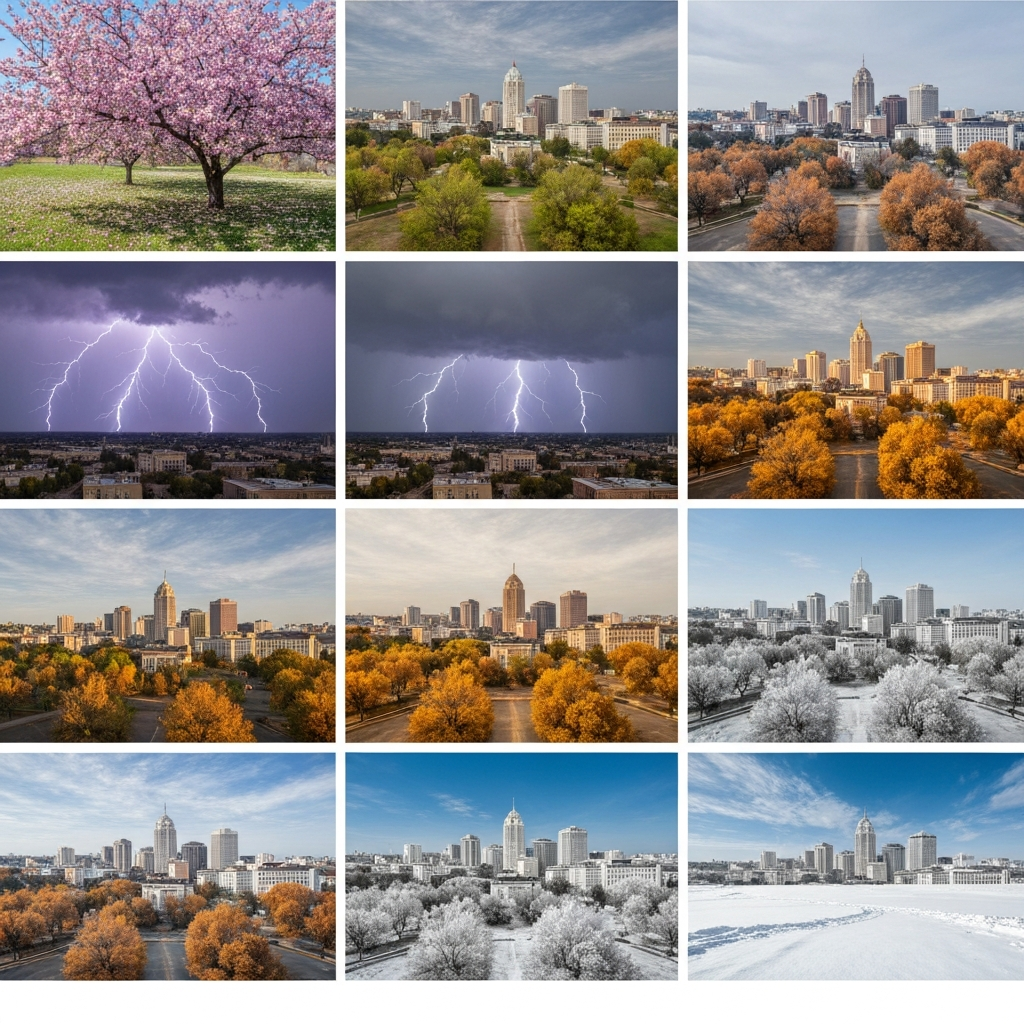
Kansas City, Kansas, experiences a humid continental climate characterized by four distinct seasons, each bringing its own unique weather patterns and environmental impacts.
Seasonal Breakdown
Spring
Spring in Kansas City is marked by a gradual warming trend. Average high temperatures in April reach around 66.5°F (19.2°C), with lows near 44.5°F (6.9°C). This season also sees increased precipitation, averaging 3.97 inches (100.84 mm), contributing to the lush greenery and blooming flora. However, spring can also bring severe weather, including thunderstorms and occasional tornadoes, as the city lies on the edge of ‘Tornado Alley’.
Summer
Summers are typically hot and humid. July, the warmest month, averages highs of 89.1°F (31.7°C) and lows around 69.4°F (20.8°C). Rainfall is abundant during this period, with June receiving approximately 5.36 inches (136.14 mm) of precipitation. The combination of heat and humidity can lead to discomfort and necessitates precautions against heat-related illnesses.
Autumn
Autumn brings a relief from the summer heat, with October averaging highs of 68.3°F (20.2°C) and lows of 46.3°F (7.9°C). Precipitation decreases to about 3.55 inches (90.17 mm). The season is characterized by vibrant fall foliage, making it a picturesque time in the city.
Winter
Winters are cold, with January being the coldest month, averaging highs of 38.9°F (3.8°C) and lows of 20.3°F (-6.5°C). Snowfall is common, contributing to the city’s winter landscape. The average annual snowfall is approximately 18 inches (45.7 cm), with December often being the snowiest month.
Environmental Considerations
The city’s climate influences various environmental factors. For instance, the warm and wet conditions in spring and summer can lead to increased pollen production, potentially extending and intensifying allergy seasons. Additionally, the region’s susceptibility to severe weather necessitates preparedness for events like thunderstorms and tornadoes.
Understanding these climatic patterns is essential for residents and visitors alike, aiding in planning and preparedness throughout the year.