

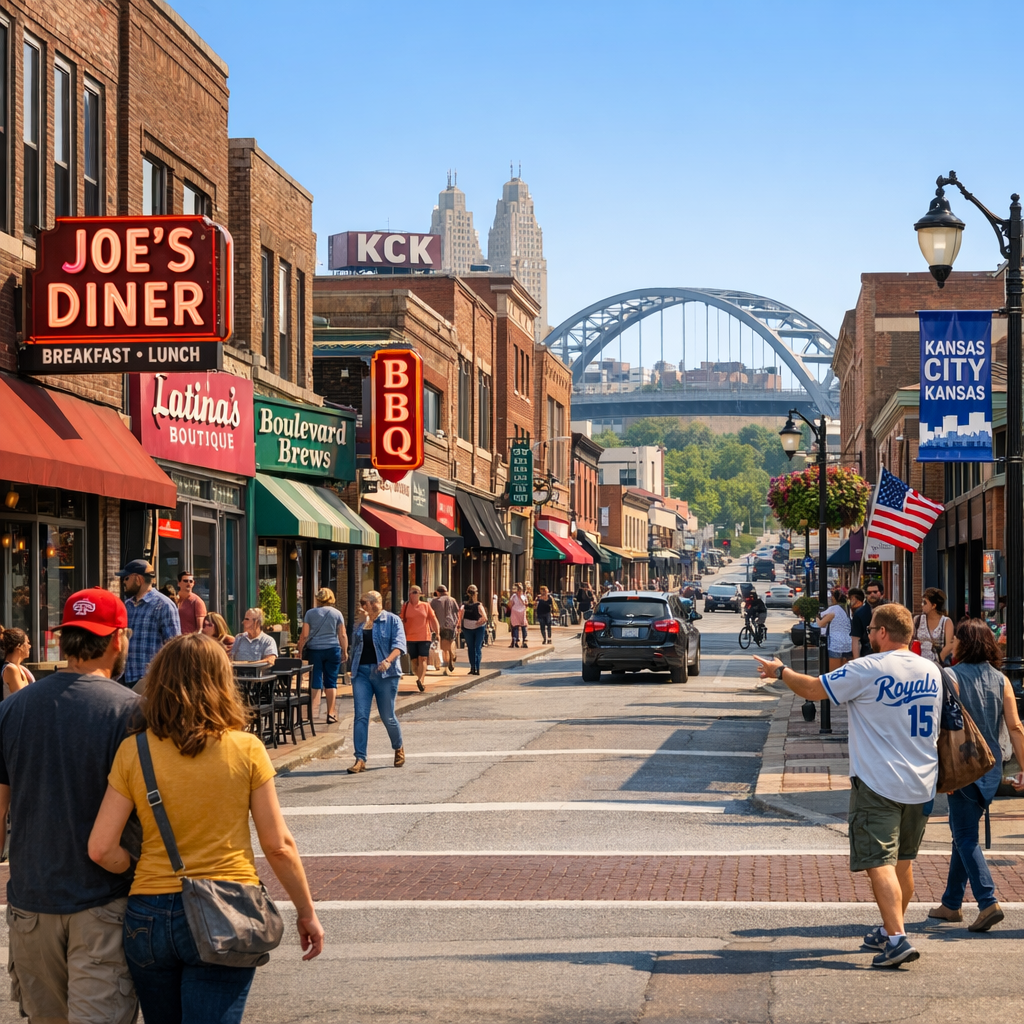
Kansas City, Kansas, is experiencing a dynamic economic landscape characterized by significant growth, emerging challenges, and promising opportunities. This article provides an overview of key developments and initiatives shaping the local business environment.
Population Growth and Housing Demand
The Kansas City metropolitan area has seen substantial population growth, with an increase of nearly 25,000 residents in 2024 alone. This surge underscores the city’s appeal but also intensifies the demand for housing, particularly affordable options. Efforts are underway to address this need, including proposed reductions in development fees for affordable housing units.
Downtown Revitalization and Business Development
Downtown Kansas City has become a focal point for revitalization efforts. The Downtown Council reports a 147% population increase since 2000, with projections indicating a further 33% growth over the next decade. This momentum is supported by initiatives like the Open Doors program, which aims to fill vacant storefronts with local entrepreneurs, bolstered by a $100,000 donation from Airbnb.
Infrastructure and Economic Impact
The new terminal at Kansas City International Airport (KCI) has significantly boosted the regional economy, generating $6.3 billion in economic output in 2024. This development has created nearly 40,000 jobs and contributed $276 million in state and local tax revenue, highlighting KCI’s role as a major economic driver.
Entrepreneurship and Community Initiatives
Local organizations are actively supporting entrepreneurship and community development. KC G.I.F.T. has distributed millions to foster Black business growth, addressing longstanding disparities in business ownership. Additionally, the Economic Development Corporation of Kansas City (EDCKC) continues to implement strategies that create quality jobs, revitalize neighborhoods, and empower small businesses.
Challenges and Future Outlook
Despite these positive trends, challenges remain. The region’s employment growth has been flat, with the unemployment rate rising to 4%. Service-producing industries, particularly professional, scientific, and technical services, are underperforming. Addressing these issues requires a concerted effort from both public and private sectors to ensure sustained economic vitality.
In conclusion, Kansas City’s economic landscape is marked by robust growth and proactive initiatives aimed at fostering a thriving business environment. Continued collaboration and strategic planning will be essential to navigate challenges and capitalize on emerging opportunities.