

By Sophia Hernandez
In the Kansas City area, recent shifts in the housing market are being driven not only by changing prices and rents, but also by ambitious development projects. Understanding these trends is crucial whether you’re buying your first home, navigating rentals, or watching how neighborhoods are changing.
Home Prices & Supply — What Buyers Should Know
Median home prices in the Heartland MLS market have risen to about $350,000, up nearly 4% year over year. The average closing price is in the low $400,000s, reflecting more high-end sales pulling up the average. Inventory remains limited — roughly 2.6 months of supply — which tends to favor sellers. Homes are spending around 36 days on market, only slightly more than the prior year. These conditions make it essential for buyers to have a clear offer strategy and strong financing lined up.
Renting Trends — Affordability and Where It’s Shifting
Rent in the metro area has grown modestly over the past year. The average rent hovers in the mid-$1,300s. One-bedroom units tend to run between $1,100 and $1,200, two-bedrooms around $1,300–$1,400, while larger homes command higher rates. Houses and townhomes tend to cost more than apartments, with amenities, location, and recent renovations playing big roles in pricing.
New and Affordable Housing & Major Projects
Local development has picked up across multiple fronts:
- Mixed-income residential developments are rising in neighborhoods like Longfellow, where nearly 150 new apartments will include a number of units reserved for lower-income residents working locally.
- Revive the Vine, a more than $400 million reinvestment in the 18th & Vine Jazz District, combines infrastructure upgrades — pedestrian plazas, parking garages, street scapes — with cultural, housing, and business improvements.
- Transit-oriented development is getting attention. Projects along major transit corridors include affordable apartments, adaptive reuse of historic buildings, and mixed-use properties where transit access is prioritized.
- Riverfront revitalization continues with the Berkley Riverfront and Current Landing efforts, enhancing public space, walkability, green space, and mixed-use commercial and residential options.
What These Trends Mean Locally
For buyers: homes cost more and move quickly; securing favorable mortgage terms and acting fast on promising listings will be key. In tight-supply neighborhoods, staying flexible on condition or location can open up opportunities.
For renters: affordability varies significantly by area and by type of housing. Keep an eye on developments near transit — these often offer better value over the long term but may come with higher rent or waiting lists.
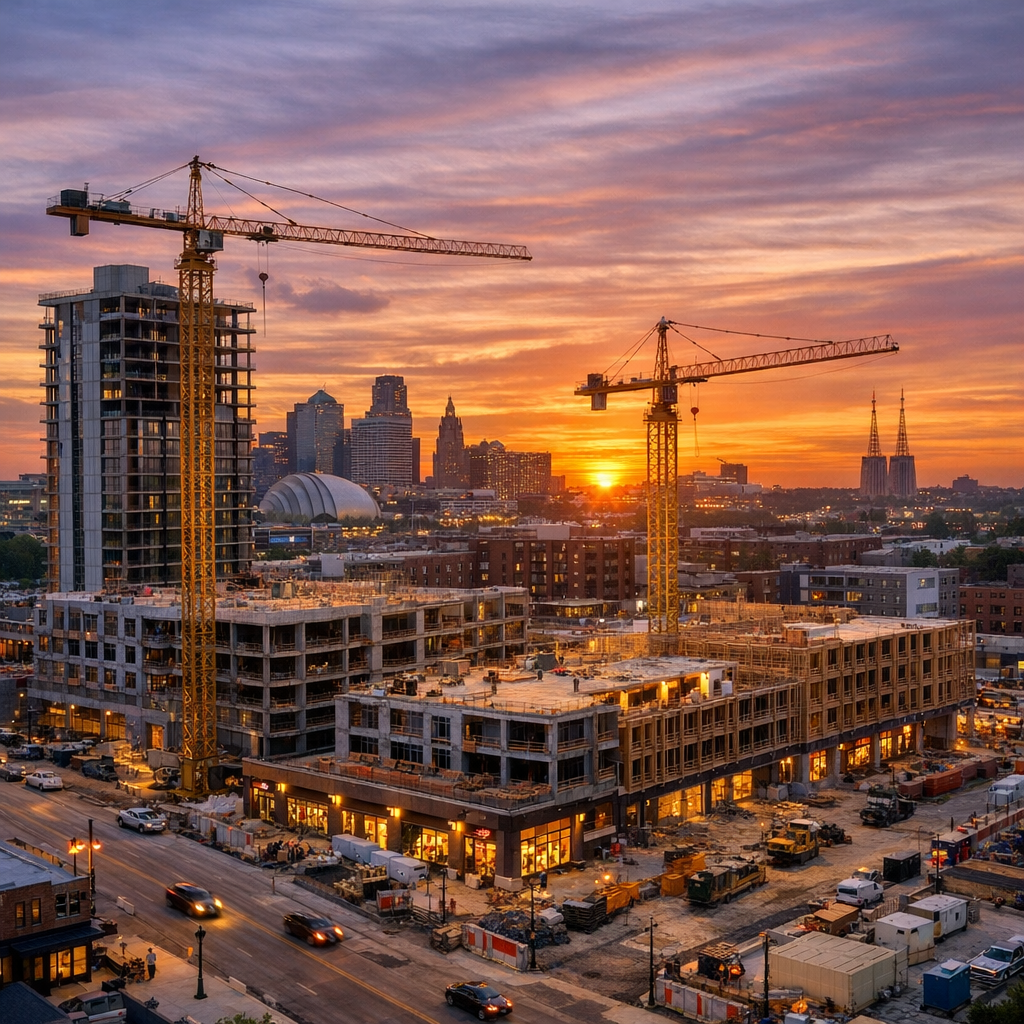
For neighborhoods: major projects are shaping not just skylines but daily life. New commercial spaces, public amenities, cultural hubs and green infrastructure are revitalizing parts of the city — often increasing desirability, which can lead to rising home values and rents in adjacent areas.
Tips for Getting Ahead
- Monitor neighborhood-level data — conditions can differ a lot from one ZIP code to another.
- Consider affordability policies — look into mixed-income or workforce housing projects if options are limited.
- Factor in transit and amenities — proximity to public transport, schools, parks still heavily impacts both price and quality of life.
- Work with local realtors or organizations familiar with affordable housing programs — they can help unlock opportunities.
Kansas City’s housing market isn’t static. While price growth has slowed compared to some past years, development is accelerating in many neighborhoods, offering ways for buyers, renters, and communities to shape how the region grows. Keeping informed and thinking strategically will make a difference.