

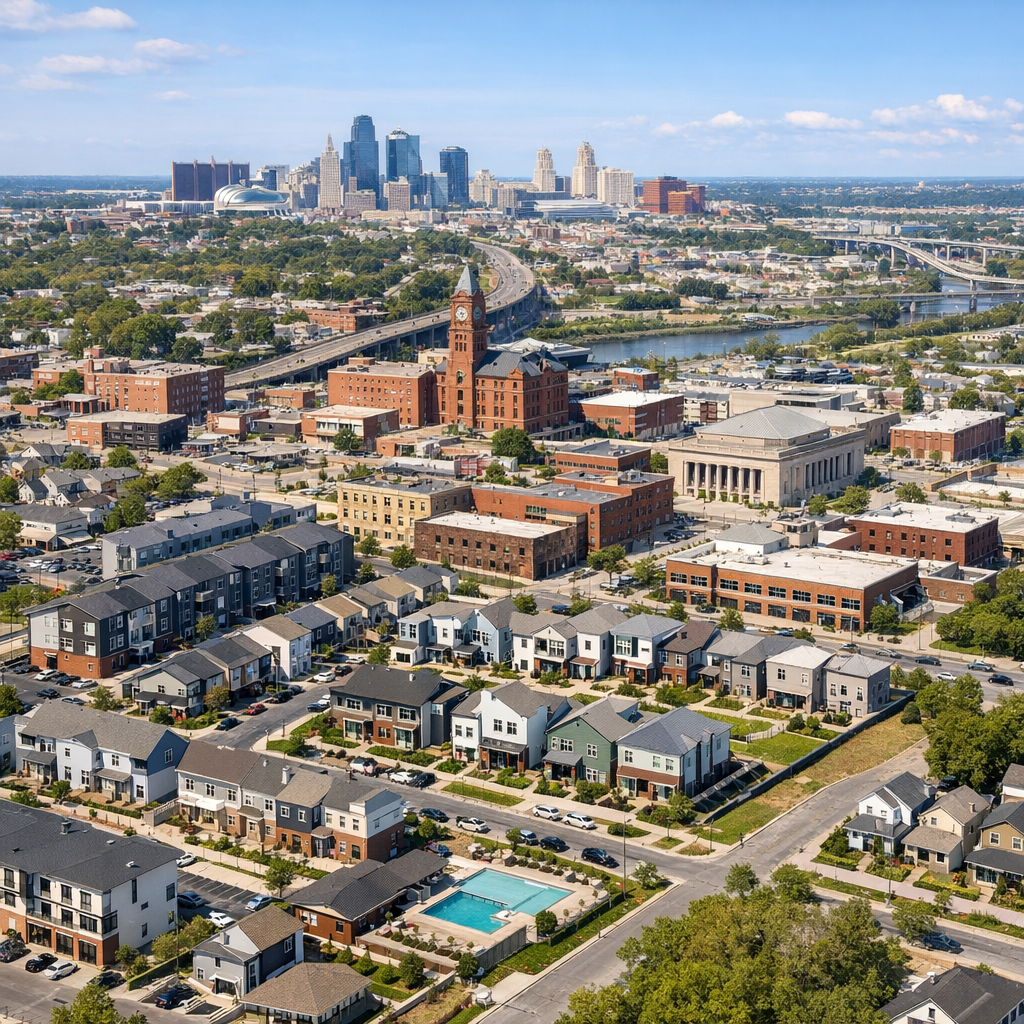
The housing market in Kansas City, Kansas, is experiencing notable shifts, presenting both challenges and opportunities for residents and potential homebuyers. Understanding these changes is crucial for making informed decisions in today’s real estate environment.
Current Market Trends
Recent data indicates a dynamic housing market in Kansas City. The median listing price has seen a modest increase, reflecting steady demand. Homes are selling in a median of 44 days, suggesting a balanced pace between buyers and sellers. Additionally, the median rental price stands at $1,250, offering affordable options for renters.
New Developments and Initiatives
Several initiatives are underway to address housing needs and revitalize communities:
- Affordable Housing Projects: The Quindaro Crossings plan aims to construct up to 500 affordable homes on vacant lots in the northeast area over the next seven years. This $94 million private investment targets starter prices around $215,000 and includes lease-to-own options, aiming to attract new residents and stimulate local retail growth.
- Attainable Housing Neighborhoods: In the Klamm Park Neighborhood, a collaboration between local developer Fran Sutton Homes and builder Clayton® has introduced new single-family homes. This project demonstrates a scalable approach to expanding homeownership opportunities by transforming vacant land into housing.
- Historic Preservation Efforts: The Boone Theater, a 102-year-old building in the 18th & Vine District, has reopened as a mixed-use venue housing the Black Movie Hall of Fame and the Black Repertory Theatre of Kansas City. This restoration symbolizes cultural preservation and economic revitalization in the area.
Implications for Homebuyers and Renters
For those considering entering the housing market, these developments offer a range of options. The introduction of affordable and attainable housing projects provides opportunities for first-time homebuyers and those seeking budget-friendly options. Additionally, the revitalization of historic areas may lead to increased property values and enhanced community amenities.
Renters can also benefit from the evolving market, with new developments potentially increasing the availability of rental properties and stabilizing rental prices.
Conclusion
Kansas City’s housing market is in a state of transformation, driven by strategic initiatives and community-focused projects. Staying informed about these changes is essential for residents and prospective buyers to navigate the market effectively and make decisions that align with their housing goals.