

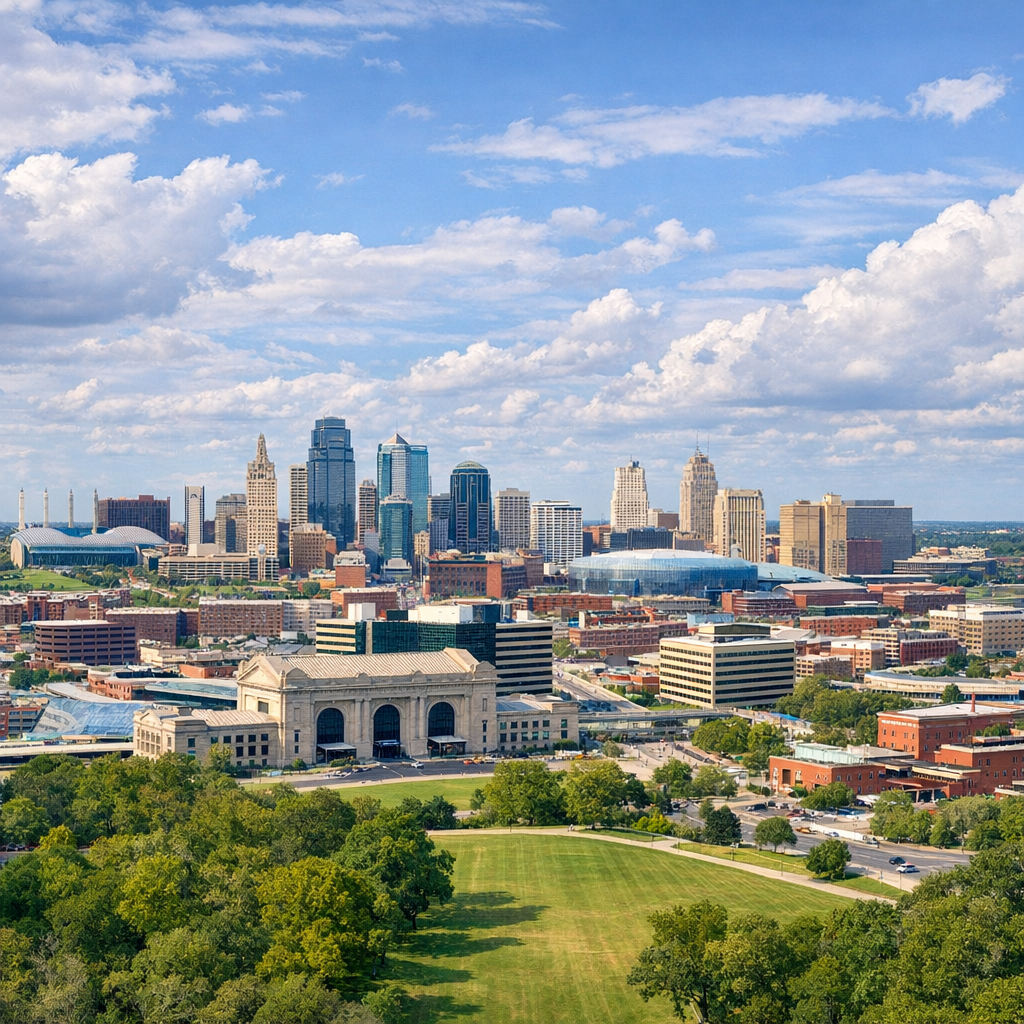
Kansas City, Kansas, experiences a humid continental climate characterized by hot, humid summers and cold, dry winters. This climate results from the city’s central location in the United States, where air masses from the Gulf of Mexico and Canada converge, leading to significant weather variability.
Seasonal Overview
Spring (March to May)
Spring in Kansas City is marked by rapidly changing weather conditions. Average temperatures rise from the 40s°F in March to the 70s°F by May. This season is also the wettest, with May receiving an average of 5.49 inches of precipitation. Residents should be prepared for frequent thunderstorms and the possibility of tornadoes, as the city lies on the edge of ‘Tornado Alley’.
Summer (June to August)
Summers are typically hot and humid, with average high temperatures in the upper 80s°F to low 90s°F. July is often the hottest month, averaging a high of 90°F. The combination of heat and humidity can lead to discomfort, so staying hydrated and limiting outdoor activities during peak heat is advisable.
Fall (September to November)
Fall brings a gradual cooling, with average highs decreasing from the 80s°F in September to the mid-50s°F by November. This season is generally pleasant, with lower humidity and moderate rainfall, making it an ideal time for outdoor activities.
Winter (December to February)
Winters are cold, with average low temperatures around 24°F in January, the coldest month. Snowfall is common, and residents should be prepared for icy conditions. Proper winter clothing and vehicle preparation are essential during this season.
Environmental Considerations
Air Quality
Kansas City has faced challenges with air quality, particularly concerning ozone levels and smog. Factors contributing to this include vehicle emissions, industrial activities, and weather patterns that trap pollutants. Residents are encouraged to stay informed about air quality alerts and take necessary precautions, especially during high-smog days.
Lead Contamination
Some urban neighborhoods in Kansas City have been identified with elevated lead levels in the soil, a legacy of past industrial activities and the use of lead-based products. This contamination poses health risks, particularly to children. Efforts are underway to remediate affected areas, but residents should be aware of potential exposure, especially when gardening or during outdoor activities.
Tree Canopy and Urban Heat
The city has recognized the importance of increasing its tree canopy to combat urban heat islands, improve air quality, and enhance overall livability. Initiatives are in place to plant trees in areas with sparse coverage, aiming to provide long-term environmental and social benefits.
Preparing for Kansas City’s Climate
Understanding the city’s climate patterns and environmental challenges is crucial for residents. Staying informed about weather forecasts, participating in community environmental initiatives, and taking personal precautions can help mitigate the impacts of Kansas City’s dynamic climate.