

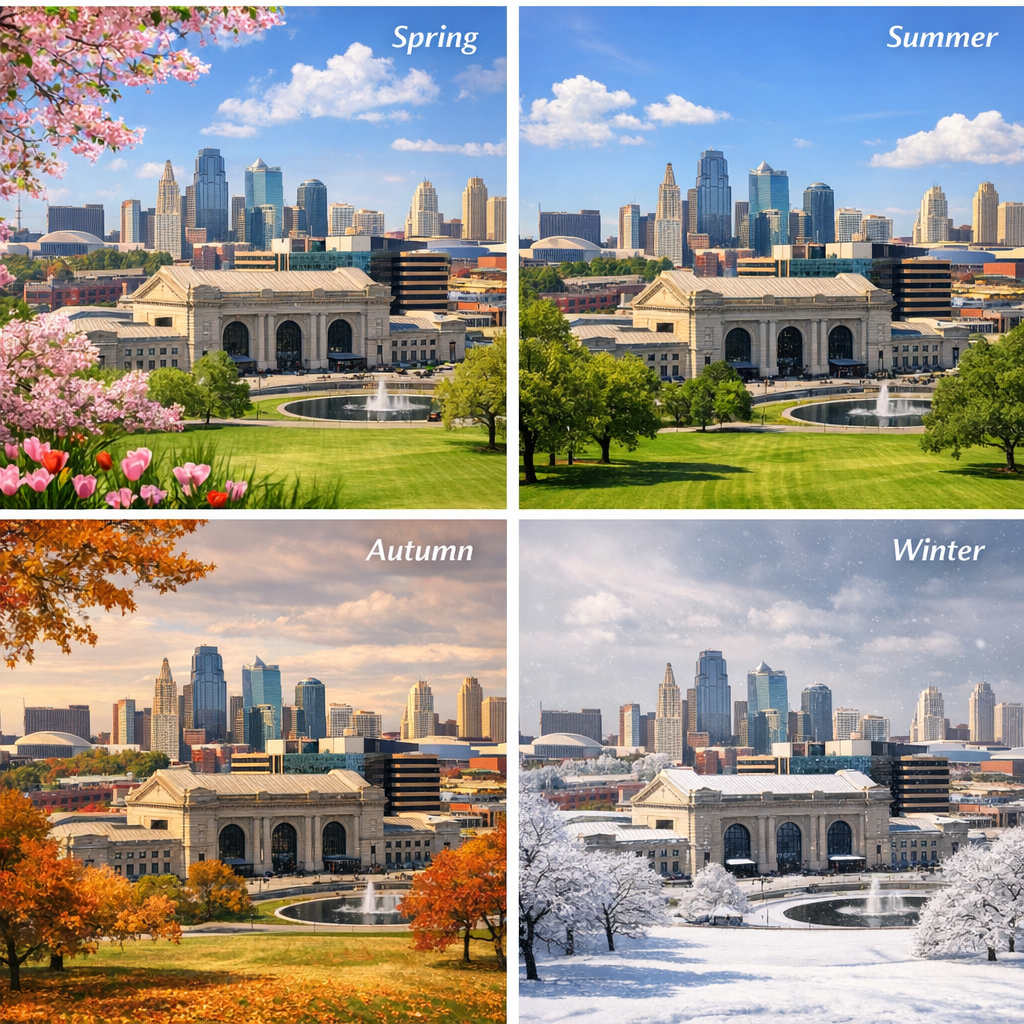
Kansas City, Kansas, experiences a humid continental climate characterized by four distinct seasons, each bringing its own weather patterns and considerations.
Spring: A Season of Transition
Spring in Kansas City is marked by rapidly changing weather. Temperatures can fluctuate widely, with averages ranging from the 40s°F in March to the 70s°F by May. This season is also the wettest, with May typically receiving the highest rainfall. Thunderstorms are common, and the area lies within ‘Tornado Alley,’ making tornadoes a possibility during this time. Residents should stay informed about weather forecasts and have a safety plan in place.
Summer: Heat and Humidity
Summers are hot and humid, with average high temperatures in the 80s°F to 90s°F range. The combination of heat and moisture can lead to muggy conditions. It’s essential to stay hydrated and take precautions against heat-related illnesses. Additionally, summer brings the potential for severe weather, including thunderstorms and occasional tornadoes.
Fall: Mild and Pleasant
Fall offers a reprieve from the summer heat, with temperatures gradually cooling from the 70s°F in September to the 50s°F by November. This season is generally mild and less humid, making it a favorite for outdoor activities. However, weather can be unpredictable, so it’s wise to be prepared for sudden changes.
Winter: Cold and Snowy
Winters are cold, with average low temperatures in the 20s°F. Snowfall is common, and the city can experience several inches of snow throughout the season. Wind chills can make it feel even colder, so dressing in layers and taking precautions against frostbite and hypothermia is important.
Understanding these seasonal patterns can help residents and visitors prepare appropriately for Kansas City’s diverse climate. Staying informed through local weather reports and being aware of seasonal risks ensures safety and comfort year-round.